
A common management strategy to spur achievement is to set aggressive performance objectives that, like the mechanical rabbits that pace racing greyhounds, push employees to maximum effort. Using “stretch goals” can be successful, but unreasonably high performance goals often spawn dishonesty and irresponsibility. Believing that “it’s a matter of survival,” a disturbing number of employees conclude that distortion, deception, and even …
COMMENTARY: Surviving Grief and Tragedy – The Spark Within 760.4
Here’s the bad news: Virtue isn’t a golden ticket to a pain-free life. Bad things happen to good people as often as they happen to bad people. It seems unfair, but in the natural order of the world, suffering is random. To expect otherwise is to sentence oneself to despondency, disillusionment, bitterness, and anger. Here’s the good news: The magic power that …
COMMENTARY 760.3 DO BAD PEOPLE THINK THEY ARE GOOD?
When she was six, my daughter Carissa asked, “Do dumb people think they’re smart?” Answering her own question, she added, “They probably do because they’re dumb.” This made me think: “Do bad people think they’re good?” I wouldn’t be surprised if most do. In fact, I think all of us are ethical in our own eyes. The human tendency to rationalize, to …
COMMENTARY 760.2: Can Corporate Ethics Programs Do Any Good?
Lots of companies are focusing serious attention on the issues of ethics and values – and lots of people think that’s a waste of time. The skeptics argue that you can’t teach ethics to adults. By the time they’re in the workplace, they’re either ethical or not. It’s a plausible argument, but it misses the point. The purpose of a …
QUOTE: There is always, always, always something to be thankful for.
REMINDER: If you want to feel good, watch: This TED presentation by Louie Schwartzberg The gratitude dance The follow-up to the gratitude dance I think you will be glad you did.

COMMENTARY: Understanding Gratitude: Gifts From the Heart
According to legend, a young man roaming the desert came across a spring of delicious crystal-clear water. The water was so sweet he filled his leather canteen so he could bring some back to a tribal elder who had been his teacher. After a four-day journey, he presented the water to the old man, who took a deep drink, smiled warmly, …
WORTH WATCHING: Gratitude Dance — It will make you smile.
I posted this back in November, but it’s so relevant I’m posting it again.
COMMENTARY 759.5: Ten Truths for the Person in Charge
Based on years of managing several organizations, including the Josephson Institute of Ethics, and on extensive consultation with large and small organizations, I’ve distilled much of what I believe and advocate into “Ten Truths.” I hope you find this list helpful. Feel free to share it with colleagues and friends. (Or print this mini-poster version of the list.) Everyone rationalizes; including you. (We’re all …
WORTH SEEING: Poster – “You is kind. You is smart. You is important.” The loving words of encouragement by a maid/nanny to the little girl constantly berated by her mother in the movie “The Help.”
Buy Levitra online Xeloda 500 mg tablets https://www.rpspharmacy.com/product/xeloda/
COMMENTARY: Hurrah for Hollywood! This Year’s Crop is Rich in Films that Inform, Move and Inspire 759.3
I know I’m out of my depth as a movie critic, but I am venturing into this new territory because there’s so much criticism about Hollywood that we don’t always give ample credit for the substantial number of truly wonderful movies that teach, move, and inspire, as well as entertain. And from my narrow perspective as an ethicist, I am grateful …
COMMENTARY: Good Ethics is More Than Good Business 759.2
Ethics is a popular topic at corporate meetings today because managers correctly see the benefits. Good things tend to happen to companies that consistently do the right thing, and bad things tend to happen to those that even occasionally do the wrong thing. Being ethical is playing the odds. Ethical companies have a competitive edge because people prefer to deal …
QUOTE: Good decisions are good decisions. — Michael Josephson
They are good in a practical sense — that is, effective — and they are good in a moral sense — that is, ethical.
OBSERVATION: “Our moral obligations and the expectations people have of us do not go away just because we ignore them.” – Michael Josephson
I once saw a cartoon depicting a CEO speaking to assembled management team at a conference table: “We have some difficult issues to resolve today. Before we begin, Ms. Gladstone, will you please hand out the moral blinders?” It may make the decision easier but it doesn’t make it better. We can’t escape moral responsibility through legal loopholes — our conduct will …
QUOTE: You can dodge your responsibilities, but you can’t dodge the consequences of dodging your responsibilities.
Whether it’s in our personal lives or work lives, there are always things we need to do, and we always have to do them ethically. We fail to do so at our peril — to our relationships, our reputations, and the esteem of those we care about.
OBSERVATION: The Ethics of Numbers — Hitting the numbers without meeting the goals.
In the last decade, the ability to track and measure almost any factor of business performance on a daily, even an minute-by-minute basis, has resulted in an even greater emphasis on setting quantitative goals to assess effectiveness and drive effort. The concept of “hitting your numbers” is a dominant theme in many organizations. The problem is, sometimes without the knowledge …
OBSERVATION: The Dalai Lama on Universal Ethics
I am confident that it is both possible and worthwhile to attempt a new secular approach to universal ethics. My confidence comes from my conviction that all of us, all human beings, are basically inclined or disposed toward what we perceive to be good. Whatever we do, we do because we think it will be of some benefit. At the …
QUIZ: What should you do when your best salesperson is a jerk?
You are a regional sales manager, and, despite your admonitions, your highest producing salesperson regularly verbally abuses clerical help, stretches the truth, and ignores other company policies. Business is bad and this person accounts for about 20% of your business. You feel certain that if you are too harsh, or if you fire her, she will go to work for …
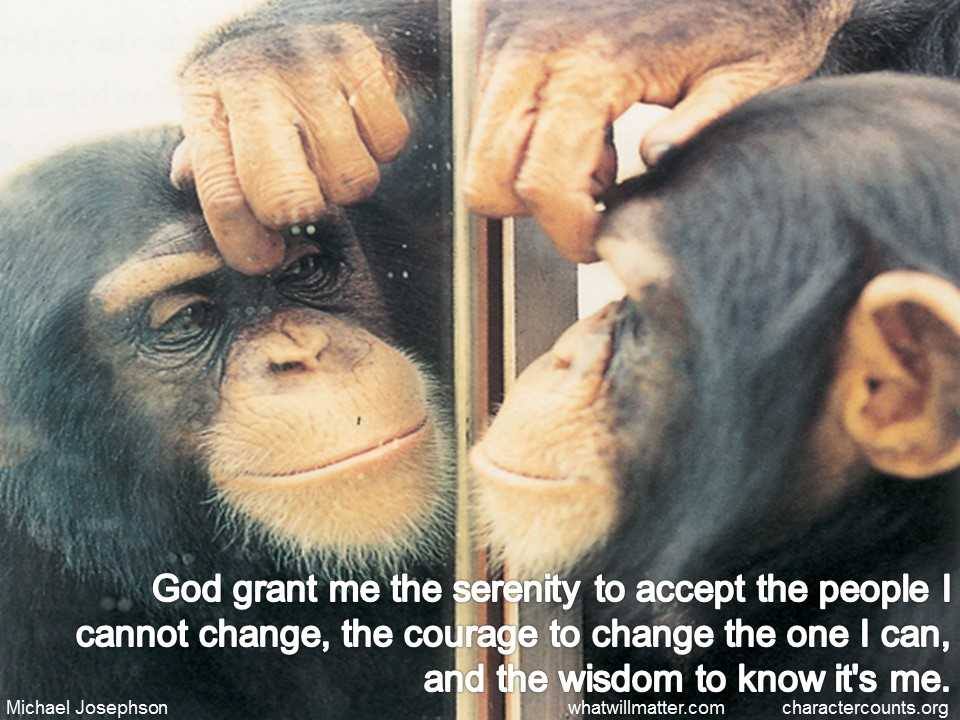
Change, Serenity & Wisdom
God grant me the serenity to accept the people I cannot change, the courage to change the one I can, and the wisdom to know it’s me. -unknown